
The Engine Room Ghost
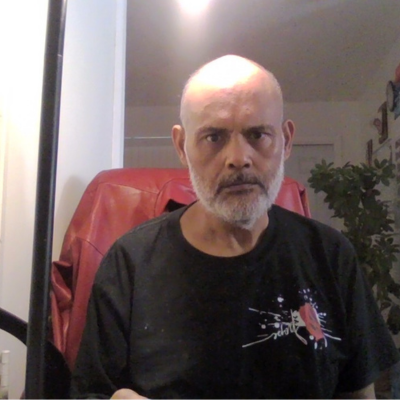
By Ismael Rodriguez
Part I The Ship That Remembered
The first thing you learn about a ship is that it never sleeps.
People sleep. Sailors collapse into narrow racks with the sound of steel breathing around them. Officers disappear behind closed doors and paperwork. The young ones dream about home, the old ones dream about retirement, and everyone dreams about a place where the floor does not move beneath their feet.
But the ship stays awake.
She groans when the waves push against her. She whispers through miles of pipes and cables. She complains when the engines are cold and sings when the turbines come alive. Every bolt, every valve, every piece of machinery has a voice if you spend enough time listening.
I spent four years listening.
They called us machinist mates, but that was just the official title. Down in the engine room, we were priests of the machine. We knew the moods of pumps, the temper of boilers, the tiny sounds that meant something was wrong before any alarm started screaming.
A sailor could ignore a bad feeling.
A machine could not.
Machines told the truth.
Humans were much better at hiding things.
Thirty-five years after I left the Navy, I still woke up sometimes thinking I was standing watch.
The dream always started the same way.
The red lights.
The heat.
The vibration beneath my boots.
The endless heartbeat of the ship.
Then came the moment when I realized I was alone.
Not alone like nobody else was there.
Alone like everyone else had vanished.
That was the part that stayed with me.
Not the explosions. Not the fear. Not even the war.
The silence afterward.
My therapist once asked me why I kept dreaming about the engine room.
“Maybe because that’s where you felt safest,” she said.
I almost laughed.
The engine room was a metal coffin filled with enough power to tear itself apart if we made one mistake.
Safe was not the word I would have chosen.
But maybe she was right.
Maybe the places that scare us the most become the places where we leave pieces of ourselves behind.
My name is Daniel Reyes.
I was eighteen years old when I joined the Navy.
Young enough to believe every problem had a solution.
Young enough to believe the world made sense.
Philadelphia raised me with loud streets, stubborn people, and the understanding that nobody was coming to save you. You learned to stand up. You learned to fight for your space. You learned that everybody carried something invisible.
My father used to say, “Everybody has a war they don’t talk about.”
I thought he meant other people.
I didn’t know he was talking about me.
When I enlisted, I thought the Navy would give me direction. A uniform. A paycheck. A purpose.
Instead, it gave me a ship.
And the ship gave me memories I would spend the rest of my life trying to understand.
The USS Resolute was not famous.
Most ships aren’t.
They don’t get statues. They don’t get movies. They don’t get songs written about them.
They simply do their jobs.
They carry sailors across oceans. They deliver supplies. They protect borders nobody sees until someone tries to cross them.
A ship is a promise made out of steel.
During Operation Desert Storm, the Resolute carried that promise across the Mediterranean.
I remember the first time I saw her.
She looked impossible.
Thousands of tons of steel floating on water like gravity had signed a temporary agreement to let her exist.
I stood there with my sea bag over my shoulder and thought:
This thing is alive.
Years later, I would wonder if it was.
The old sailors always talked about ships like they had personalities.
Some ships were lucky.
Some ships were cursed.
Some ships remembered.
Back then, I thought it was just sailor superstition.
I know better now.
The engine room was where I spent most of my deployment.
Four decks below the main level, away from sunlight, away from the ocean breeze, away from everything people imagined when they thought about the Navy.
People pictured sailors standing proudly on deck, staring at the horizon.
That was not my Navy.
My Navy was sweat running down my back while I crawled beneath pipes.
My Navy was checking gauges at three in the morning.
My Navy was holding a flashlight between my teeth while tightening a bolt that was older than some of the sailors standing watch.
My Navy was knowing that a machine could kill you without ever hating you.
The engine did not care if you were scared.
It did not care if you missed your mother.
It did not care if you were nineteen years old and wondering whether you had made the biggest mistake of your life.
The engine demanded respect.
And if you gave it respect, it carried you home.
During the war, we heard rumors.
That is how wars travel through ships.
Not through official announcements.
Through whispers.
Someone heard something from someone who heard something from someone else.
A radio message.
A conversation between officers.
A newspaper brought aboard.
A sailor saying, “My cousin says they’re moving faster than expected.”
The truth was always somewhere in the middle.
Nobody knew exactly what was happening.
But everybody knew something was happening.
We were young men surrounded by steel, waiting for history to decide whether it wanted our names.
Most of us were not afraid to die.
That was not the hardest part.
The hardest part was imagining the people we would leave behind.
My mother still had my high school graduation picture on the refrigerator.
My little sister still thought I was invincible.
Nobody tells you that war is not really about dying.
It is about the people who have to continue living afterward.
The night I first heard the ghost, I was nineteen years old.
I was standing watch in Auxiliary Machinery Room Two.
The ship was moving through dark water.
The kind of darkness where the ocean looks endless and the sky looks like it forgot to exist.
My partner had gone to check another section.
I was alone with the machinery.
The temperature was miserable.
Sweat covered my hands.
The pumps continued their endless rhythm.
Then I heard it.
A voice.
Not through the communication system.
Not over the radio.
A voice behind me.
“Don’t forget the valve.”
I turned around.
Nobody was there.
I grabbed my flashlight.
“Very funny,” I said.
No answer.
Sailors played jokes on each other all the time. It was how we survived boredom and fear.
But something about that voice felt different.
It was not a prank.
It was not a person trying to scare me.
It sounded like a warning.
I checked the valve.
It was exactly where it should be.
Pressure normal.
Temperature normal.
Everything normal.
I told myself I imagined it.
That was the easy explanation.
The human brain does strange things when you are tired.
When you are stressed.
When you are nineteen years old, thousands of miles from home, surrounded by machines louder than your own thoughts.
I went back to work.
But before my watch ended, the voice returned.
This time, it said my name.
“Daniel.”
Every hair on my arms stood up.
Nobody on that ship called me Daniel.
Not unless they were reading my paperwork.
I was Danny.
Everybody called me Danny.
The engine room was the only place where I was Daniel.
I stood there frozen, staring at the pipes and gauges.
The ship continued breathing.
The pumps continued turning.
The ocean continued moving beneath us.
And somewhere inside all that steel, something whispered:
“You’re not supposed to forget.”
I did not understand those words then.
I would spend the next thirty-five years trying to figure them out.
Because the engine room ghost was not haunting the ship.
It was haunting me.
Part II The Ghost in the Engine Room
The strange thing about memories is that they do not stay where you leave them.
People talk about the past like it is behind us, like it is some old photograph sitting in a drawer. Something you can take out when you feel nostalgic and put away when it becomes uncomfortable.
That is not how memory works.
Memory is a sailor.
It travels.
It crosses oceans.
It hides in places you never think to look.
For thirty-five years, the engine room followed me.
I heard it in apartment buildings when the pipes knocked in the walls. I heard it in factories when machines started their morning shift. I heard it whenever a fan turned on in the middle of the night and created that low mechanical hum that sounded almost like a ship breathing.
Most people heard noise.
I heard home.
That was the cruel joke.
The place where I lost parts of myself was also the place that made me feel most alive.
After the war, people wanted simple stories.
They wanted heroes and villains.
They wanted victory parades and clean endings.
But wars do not end when politicians sign papers.
Wars end differently for everyone.
Some people leave the battlefield.
Some people bring it with them.
The Resolute continued its mission.
The days became a strange mixture of routine and uncertainty.
That was the nature of military life.
You could spend twelve hours repairing equipment, joking with your friends, complaining about the food, and arguing about sports.
Then one announcement over the speaker could change everything.
All hands to stations.
Prepare for possible action.
Those words had a way of making everyone remember what we really were.
Not students.
Not mechanics.
Not teenagers pretending to be adults.
Sailors.
The ocean did not care how old you were.
The machine did not care how scared you were.
The mission continued.
The night of February 14th started like any other night.
I remember that because I always thought important moments were supposed to announce themselves.
A storm should have arrived.
An alarm should have sounded.
The sky should have cracked open.
But history usually enters quietly.
Sometimes it walks through a door wearing a normal face.
I was assigned maintenance duty in the lower engineering spaces.
The air was thick and hot.
The machinery shook the deck beneath my feet.
Every sailor who worked below decks learned the language of vibration.
A healthy machine had a rhythm.
A sick machine had a complaint.
You learned the difference.
A pump that was slightly off.
A turbine that sounded tired.
A pipe that carried pressure differently.
The ship spoke.
You just had to listen.
That night, the ship was nervous.
At least, that is how it felt.
The gauges were fine.
The systems were fine.
Everything on paper was fine.
But I had learned something important:
Paper does not hear.
Humans do.
I walked past the same section where I had heard the voice days earlier.
I stopped.
I do not know why.
Maybe curiosity.
Maybe fear.
Maybe because some part of me already knew.
The engine room was empty.
The only sound was the machinery.
Then came the whisper.
“Daniel.”
I closed my eyes.
“No.”
The word came out before I could stop it.
I opened my eyes.
Nothing.
The flashlight beam moved across pipes, metal walls, control panels.
Nobody.
I should have left.
I should have reported it.
I should have done a hundred things differently.
But young men do strange things when they are afraid.
Sometimes we pretend we are not.
I stepped closer.
“Who’s there?”
The answer came from everywhere.
“Listen.”
The machinery changed.
Only slightly.
A tiny difference.
Most people would never notice.
But I did.
A pressure fluctuation.
A vibration.
Something wrong.
I moved quickly.
The warning came from experience, not courage.
A valve was failing.
A small problem.
The kind of thing that becomes a large problem when ignored.
I shut down the system.
A few seconds later, the pressure alarm sounded.
The engineering space came alive.
People rushed in.
Questions.
Movement.
Orders.
Confusion.
The kind of chaos that happens when everyone is trying to prevent a disaster while pretending they are not afraid.
My supervisor looked at the readings.
Then looked at me.
“You caught this early.”
I nodded.
“Yeah.”
“How?”
I looked at the machinery.
I almost told him.
I almost said:
A ghost warned me.
Instead, I said the only thing that sounded reasonable.
“I heard something.”
He stared at me.
“Something?”
I shrugged.
“The vibration changed.”
He nodded slowly.
That answer he understood.
Machines made sense.
Ghosts did not.
For years afterward, I wondered if I had imagined the voice.
Maybe my mind connected sounds into words.
Maybe exhaustion turned machinery into a conversation.
Maybe the human brain creates patterns because it needs meaning.
That explanation worked.
Almost.
Except the voice knew my name.
And it saved lives.
A few days later, I found out something that changed everything.
I was walking through the engineering spaces when I saw an old sailor’s name scratched into a maintenance panel.
Not carved deeply.
Just enough to survive.
M. Alvarez
Below it were four numbers.
A date.
I asked one of the older sailors about it.
He became quiet.
“You found Alvarez?”
I pointed at the panel.
“Who was he?”
The sailor looked around before answering.
“Machinist Mate Third Class. Served on this ship years before you.”
“What happened to him?”
The sailor looked at the machinery.
“Engine room accident.”
“When?”
He told me.
The date matched the numbers scratched into the panel.
The same day.
The same place.
The same section.
I laughed.
Not because it was funny.
Because sometimes your brain laughs when it does not know what else to do.
“You’re telling me there’s a ghost?”
The old sailor shrugged.
“I’m telling you every ship has stories.”
“That’s not an answer.”
“It’s the only answer that matters.”
I hated that.
I hated answers that sounded like riddles.
Maybe because war teaches you to want facts.
Coordinates.
Numbers.
Orders.
You do not survive combat by believing in mysteries.
You survive by knowing exactly what is happening.
But the older I got, the more I realized life is mostly mysteries wearing ordinary clothing.
The old sailor told me about Alvarez.
He said Alvarez was the kind of sailor everyone trusted.
Always early.
Always helping younger sailors.
Always willing to crawl into places nobody else wanted to go.
“He liked the engine room,” the sailor said.
I looked at the machinery.
“Why?”
He smiled.
“Some people like quiet places.”
I looked around at the roaring pipes and shaking metal.
“Quiet?”
He shrugged.
“You’d be surprised what sounds quiet when your heart is louder.”
I remembered that sentence.
I still remember it.
Because he was right.
The engine room was never silent.
But it was honest.
The machines did not judge.
They did not ask why you were afraid.
They did not ask why you missed home.
They simply existed.
Maybe that was why sailors loved ships.
Maybe we were all broken machines trying to keep running.
The rest of the deployment passed in pieces.
Days blurred together.
Maintenance.
Training.
Waiting.
The strange rhythm of military life where boredom and danger sit beside each other like old friends.
Then came the night everything changed.
The night the ghost stopped warning me about the ship.
And started warning me about myself.
The ship moved through dark water.
The engine room trembled beneath my feet.
I was standing my watch when the voice returned.
But this time it sounded different.
Not distant.
Not mechanical.
Sad.
“Daniel.”
I swallowed.
“I’m here.”
The words surprised me.
I had answered a ghost.
A grown man would later tell himself that he had been tired.
That he had been young.
That he had been imagining things.
But that night, I did not feel foolish.
I felt like someone had finally spoken.
The voice came again.
“You have to remember.”
“Remember what?”
The machinery groaned.
The lights flickered.
And then the voice said:
“The ones who don’t come home.”
The alarm sounded.
Red lights flashed.
The ship shook.
And every sailor in the engine room moved at once.
Because the war had finally arrived.
Not as a headline.
Not as a speech.
Not as something happening somewhere far away.
It arrived as fire.
And noise.
And the terrible knowledge that the machine beneath us was no longer just carrying us.
It was carrying us into history.
Part III The Last Watch
The first thing I remember is the sound.
Not the explosion.
Not the alarms.
The sound.
People think war is loud, and they are right. But what they do not understand is that the loudest moments are surrounded by smaller sounds that stay with you forever.
A boot hitting the metal deck.
Someone breathing too fast.
A wrench falling from a shaking hand.
A voice trying to sound calm while giving an order.
The human sounds.
Those are the ones that follow you home.
The Resolute shook beneath us.
The ship was not supposed to feel afraid.
Ships are machines.
Steel does not fear.
But standing in that engine room, feeling thousands of tons of metal move beneath my feet, I understood why sailors gave ships names and personalities.
Because when you are trapped inside something that massive, you need to believe it is alive.
You need to believe it wants to survive too.
The alarms screamed.
The emergency lights flashed.
Everyone moved.
Years of training replaced panic.
That is the strange miracle of military life.
You practice something so many times that when the impossible finally arrives, your body already knows what to do.
Your mind may be terrified.
Your hands are not.
I moved with the crew.
Checking systems.
Following procedures.
Reporting damage.
Doing the job.
The job was the thing that saved us.
Not courage.
Not heroism.
Not some movie version of bravery where someone stands alone against disaster.
The truth is less dramatic.
The truth is people doing their jobs together.
A sailor tightening a valve.
Another sailor carrying equipment.
Someone calling out numbers.
Someone else answering.
A hundred small acts becoming one large act of survival.
That is what keeps ships afloat.
That is what keeps people alive.
The damage was contained.
The Resolute kept moving.
But something changed afterward.
Something inside everyone.
Before that night, war had been an idea.
A possibility.
A thing discussed in briefings.
After that night, war had a sound.
It had a smell.
It had weight.
Nobody talked about it much.
Sailors are strange creatures.
We can stand next to someone during the worst moment of their life and then argue about bad coffee an hour later.
It is not because we do not care.
Sometimes it is because we care too much.
Sometimes ordinary things are the only way to remind yourself that you are still human.
The day after the incident, I went back to the engine room.
I do not know why.
Maybe I wanted answers.
Maybe I wanted to prove I was not afraid.
Maybe I wanted to thank something that did not exist.
The machinery was running.
The ship was moving.
Everything looked normal.
Except for the panel.
The one with Alvarez’s name.
I stood there for a long time.
Then I noticed something I had never seen before.
A second set of scratches beneath his name.
Words.
Small.
Almost hidden.
WE KEEP WATCH.
I touched the letters.
Cold metal.
Nothing more.
No magic.
No miracle.
Just steel.
But I felt something.
Not fear.
Not exactly.
Something closer to understanding.
The ghost was not a dead sailor trapped on a ship.
The ghost was every sailor who had ever stood watch.
Every person who stayed awake while others slept.
Every person who carried responsibility that nobody else saw.
The ghost was memory.
And memory does not die.
It gets passed down.
When I finally left the Navy, I thought I was leaving the ship behind.
I was wrong.
The Navy teaches you how to maintain equipment.
It teaches you procedures.
It teaches you discipline.
Nobody teaches you how to leave.
Nobody tells you that after years of being part of something larger than yourself, civilian life feels strangely quiet.
Too quiet.
I returned to Philadelphia.
I got a job.
I paid bills.
I tried to become normal.
Normal is an interesting word.
People use it like it means something real.
But normal is just a costume everyone wears.
Some people wear it better than others.
I carried my own costume.
I smiled when people asked how I was doing.
I said, “Fine.”
Everybody in America knows that word.
Fine.
A tiny little lie we use when the truth is too heavy to carry.
I did not talk about the engine room.
I did not talk about the voice.
I did not talk about the nights when I woke up sweating, convinced I was still surrounded by steel and alarms.
Because I was afraid people would think I was crazy.
Maybe I thought I was crazy.
That is the cruel part about invisible wounds.
A broken arm gets a cast.
A broken heart gets sympathy.
A broken memory gets silence.
Years passed.
The young sailor became an old man.
The person who once climbed through machinery became someone who walked slower and looked back more often.
Eventually, I visited the Resolute one last time.
She was no longer active.
Ships, like people, eventually reach the end of their journey.
She sat in a harbor, retired and quiet.
A monument to a different time.
I stood beside her and placed my hand on the hull.
Cold steel.
Old friend.
I expected to feel sadness.
Instead, I felt peace.
I walked through her corridors.
I visited the engine room.
The place where I had spent so much of my youth.
The place where I had heard the voice.
The machinery was gone.
The room was empty.
For the first time, the engine room was truly silent.
And somehow, that was the loudest sound I had ever heard.
I stood there waiting.
I do not know what I expected.
A voice.
A sign.
A ghost.
Anything.
Nothing happened.
I smiled.
Because I finally understood.
The ghost was never supposed to follow me forever.
It was supposed to teach me how to carry what happened.
I sat on the metal floor.
An old man sitting where a frightened young sailor once stood.
I closed my eyes.
And I remembered.
Not just the fear.
Not just the war.
Everything.
The jokes.
The friendships.
The impossible feeling of being young.
The people who stood beside me.
The ones who came home.
The ones who did not.
That was the thing about memory.
We often think remembering means holding onto pain.
But remembering is also how we honor joy.
A person is not only the worst thing that happened to them.
A war is not only destruction.
A life is not only survival.
I spent years thinking the ghost wanted me to remember death.
I was wrong.
The ghost wanted me to remember life.
The sailors who stood watch.
The families waiting at home.
The young people who became older before they were ready.
The quiet heroes who never appeared in history books.
The people who fixed machines and carried secrets.
The people who kept going.
The people who stayed awake.
The people who kept watch.
Before I left the engine room for the last time, I placed my hand on the old panel where Alvarez’s name had been.
The scratches were still there.
Faded.
But visible.
I whispered:
“Thank you.”
I waited.
For the first time in decades, I did not expect an answer.
Then the ship made a sound.
A small sound.
A familiar sound.
A vibration traveling through old steel.
And for one brief moment, I heard it.
Not a warning.
Not a command.
Not a reminder.
A simple sentence.
The same sentence I had heard years before.
But now I understood.
“You’re not supposed to forget.”
I smiled.
Because I finally knew what it meant.
Remembering was not living in the past.
Remembering was carrying the past forward.
The engine room ghost was never a haunting.
It was a promise.
That somewhere, beneath all the noise of history, someone was still listening.
Someone was still keeping watch.
And as long as we remembered, nobody truly disappeared.
****
Ismael S. Rodriguez Jr. is a U.S. Navy veteran, Puerto Rican-Filipino poet, writer, and artist who writes under the name “The Bulletproof Poet.” His work explores identity, military experience, working-class life, mental health, social justice, spirituality, and the strange beauty of being human. His poetry and fiction have appeared in numerous literary journals and anthologies. Through humor, surrealism, and unflinching reflection, Rodriguez writes to challenge assumptions, amplify overlooked voices, and find meaning in a beautifully complicated world.