
IN KOSCIUSKO’S GARDEN, 1992
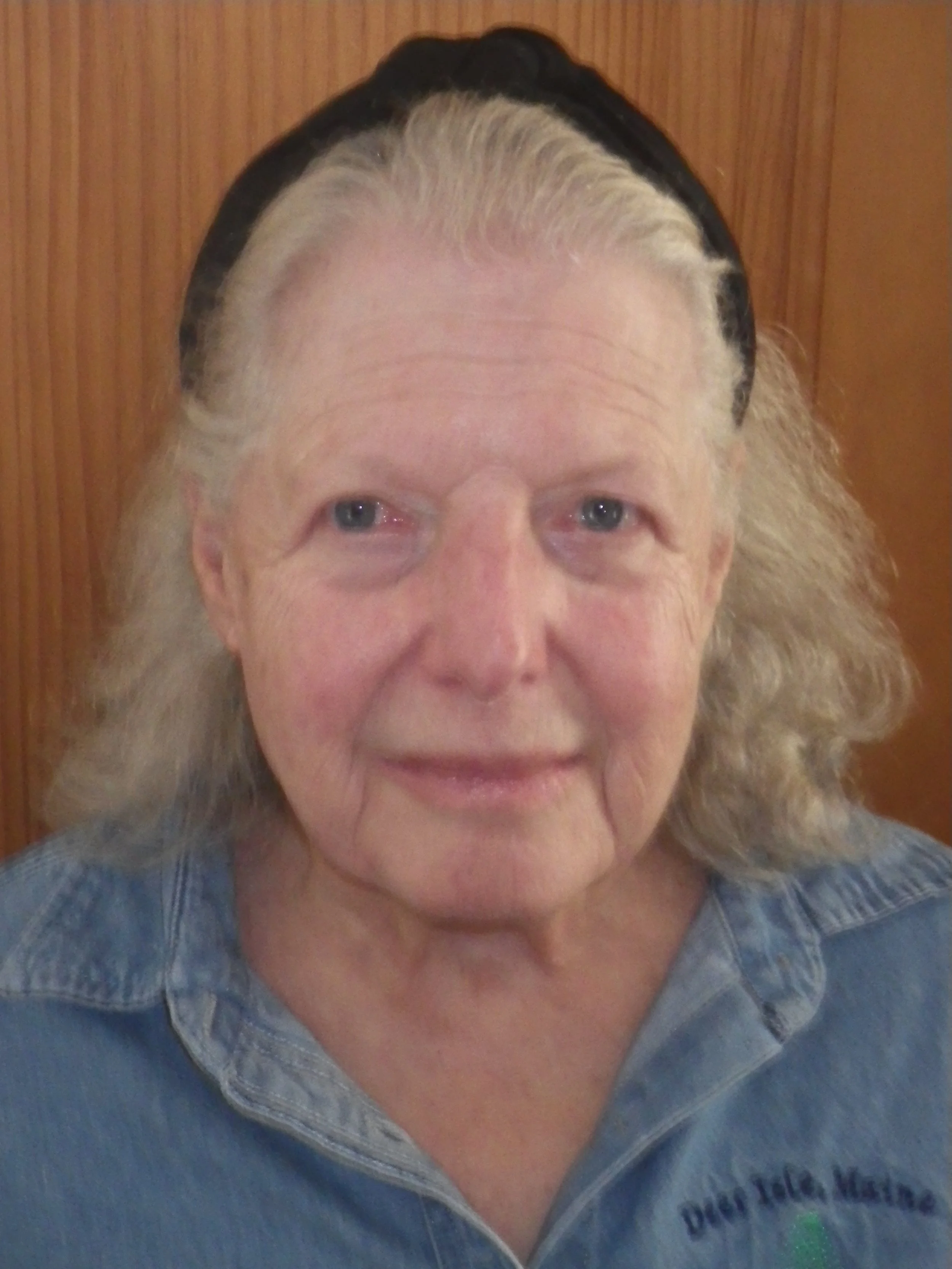
By Davida Kellogg
“The war now is away back in the past, and you can tell what books cannot.”
Gen. William Tecumseh Sherman
West Point,1992
“History is Hell.” That’s the motto of us ‘ROTC Rangers,’ twenty-seven middle-aged college professors from all over the country assembled here at West Point for a month in the summer to learn how to teach Military History to Cadets. Hell camping out in the luxury of the Thayer Hotel. Place is built like a brick fortress to fit in with the rest of the architecture at the Academy, yellow flowered wallpaper and watercolors of eighteenth-century regimental uniforms on the walls. Just Hell having nothing to do all day but what we do best, arguing with 20/20 hindsight the strategies Cornwallis and Lee should have used and the geopolitical reasons why they would have lost anyway.
Oh, I tell you there’s such a fine rational coolness to decades-old warfare waged anew over a pitcher of Genesee Cream Ale at the South Gate Bar, or a game board at the home of one of our instructors out at Stony Lonesome on the weekends when we don’t have a staff ride to some battleground scheduled. A man could almost forget for the moment what it was really like when the heat was on.
In the air-conditioned comfort of the Academy’s sleek silver bus, we debate the merits of the Ken Burns documentary for teaching the Civil War. Yes, it’s brilliant, maybe even Art. But that’s just the trouble with it. There’s something artificial, sickly sweet and sentimental about it. Like that fake period waltz played over and over again on the fiddle till repetition’s transformed it into an anthem for men who never heard it — ‘Ashokan Farewell,’ composed for a folk music festival all of ten years ago. Time does that to war, turns history into lukewarm nostalgic pap for the public’s consumption. Or the bloodless Jominian exercises we instructors rehash and serve up to our students cold. The difference between life and death, victory and defeat reduced to the principles of MOSS MOUSE — Mass, Objective, Security, Surprise, Maneuver, Offensive, Unity of Command, Simplicity, and Economy of Force. Easier to talk about that way, no danger of burning your tongue.
That’s what I think. But later in the day I go whooping and yelling with the others across a certain unmown field at Gettysburg, re-enacting Pickett’s Charge. The only danger now from the ticks in the tall grass and the cars speeding by on the Emmitsburg Pike just before you get to the Confederate objective, a spindly copse of trees. Some of my colleagues have done this before. Put on meticulous reproductions of butternut and gray so much finer than anything their great granddaddies ever wore and marched out shoulder to shoulder across this same field, most to go rolling in the dirt pretend-dead before they even crossed the road. Back home, Civil War reenactors in blue forage caps with the red Maltese cross of Chamberlain’s Twentieth Maine on the crown have to content themselves with following the Star Trek freaks in the Fourth of July parade, since they have no local battles to refight. I hear that now some ‘Living History’ buffs have started reenacting Vietnam. I don’t want to know how they do that.
I don’t want to think about it at all. In my own classroom, I can arrange for that. Diddle the syllabus around. Take a little too long on Sherman’s March to the Sea. Get lost in the Ardennes. Divide the class into Airdales and Grunts and get them all worked up arguing whether Air Power alone can win a war. And you won’t have to pretend to listen to the 60’s Peace March re-enactor going on about how Vietnam was a racist police action, and we never would have dropped napalm on blue-eyed German blondes. Kid’s folks have been singing that bullshit song to him so long it’s become his ‘Ashokan Farewell.’ But you don’t know squat about it if you never sat in the doorway of a Huey with a spare flack vest doubled-up under your butt and the thwap-thwap-thwap of the rotors and the stutter of the door gunners’ M-60’s in your ears on your way into a hot LZ. Name of that song was SURVIVAL, Son. You did what you had to do. And when I teach to my ROTC Cadets alone, I don’t teach just MOSS MOUSE like I do when there are civilians present; I do my damnedest to teach them MOSS MOUSES.
The young West Point Captain in charge of us professors stands in the doorway to our bus, counting our noses as we file on board for the trip back to the Point. ‘Kidman’ the name tag above the right pocket of his uniform shirt reads. Short, slight. Seems hardly old enough to have graduated the Academy much less been promoted twice, trying to make up for appearances by being ‘a real hard charger.’ The Vets among us call him Capt. Kid.
“Everybody got his Ranger Buddy?” he asks.
That’s a little joke at our expense, born of the sheer relief that his charges have come through the physically demanding part of the program intact, that none of us has gone down with heatstroke or cardiac arrest and he hasn’t had to arrange to have our over-age, overweight carcasses carried off this hallowed ground. Can’t blame him. Babysitting civilian professors — what a pain-in-the-ass job for a real Ranger. I know. Used to be one.
I know what he’s thinking when, not content with his count, he starts calling our roll — ‘Don’t forget nothing,’ the first of Roger’s Rangers’ Standing Orders, our ‘Ten Commandments.’ Only there are more than just ten, because War’s a whole lot more complicated than Theology. You don’t believe me? Go research your treatise on Quantum Mechanics and the number of angels who come out to dance the quadrille on Schrödinger’s kitten’s tail every time your back is turned. Then quick! Go tell me how many VC are hiding in the triple canopy jungle waiting to slit your throat come nightfall, without getting blown up or shot for your trouble.
“Okay,” our young Captain breathes an audible sigh of relief when our missing woman returns from a last-minute visit to the Visitors’ Center latrine. “Saddle up.” He wouldn’t want to be late getting us back to the Point. Myself, I wouldn’t mind it at all if that little old lady Prof. from Alaska, the toughest bird among us really, had missed movement, and we’d had to go halfway back to Gettysburg to find her grazing on herbs and berries along the roadside between thumbing rides. Throw the schedule off by a day, better yet two, and sorry about that, but there’d be no time left for Vietnam. Like we used to say, ‘xin loi.’
But we’re back at the hotel doors by 1500, just like it says in the schedules we all got in our orientation packets. Get your room key from the front desk, shower, forage in Highland Falls for some chow, hit the books, lights out. And tomorrow, we start right in again at 0800 with WWI, the war that was fought to end all wars but didn’t. No slacking off now because every schoolboy knows there’ll be WWII and Korea to follow. Then it’s on to Vietnam.
So, all week long that old feeling’s been building, same as on the way into an insertion. Same hypersensitivity. Same fluky pulsing in the ears. Same shakes and sweats from the adrenaline surge, the fear, and the hope that the mission wouldn’t go, and the knowledge that nothing would stop it. Nothing to do but go out and meet it like I always did. Take a secure seat near the door of our classroom in the basement of Thayer Hall in case I have to un-ass in a hurry, and a dose-and-a half of the prescription pain killers for my bum leg big enough to numb me out till I don’t give a damn anymore how things hurt.
“Gonna kill yourself that way someday, over-dosing on the Darvon,” the sawbones at the VA keeps telling me. Then he scribbles out a scrip for another twenty pills. Stuff I just choked down in the latrine before class doesn’t even last me till the first coffee break. The slides of the places I know are the worst. You think you know a place? I could still tell mud from the Delta from Highlands dirt blindfolded, by the taste and the smell alone.
“Break’s over, Sir,” today’s instructor, our young Captain again, tries to maneuver me back into the classroom. “You want to take your seat now.” What I want is a smoke.
“Why don’t you just go start without me,” I tell him. I am not in the Army anymore, and I never did appreciate being pushed around like that by people I outranked.
“But if you don’t come now, you’ll miss the fighting for Hué.” As if that was something anyone would feel sorry to have missed.
“I was in-country at the time, I know how it comes out.” We go on like that, snatching the initiative back and forth, each trying to jostle the other back into that airless, over air-conditioned room.
“Well, in that case you’ve got to come, Col. Kilroy.” He does me the courtesy of calling me by my former rank (although I was only a light Colonel), instead of Doctor or Professor like the civilian I now am. “The others will want to hear about it from someone who was there.”
“Hey! I never said I was talking about that. There hasn’t been enough time. It’s not History yet. I’m not History!”
“Okay, okay,” he backs off, desperate to calm me down. To be seen harassing one of the civilian professors in the hallway would not be a career-enhancing move. “I won’t mention you were there. You won’t have to talk about it if you don’t want to. Never could get my old man to say word one about it, either. Not even after I got into the Academy. Wouldn’t even come along to drop me off on Report Day...,” he runs on, fidgeting with the heavy ring on his finger.
“Good man, your dad.”
“Huh?”
“Tried to keep you out of all this....” I wave my arms around towards the buildings, the statues and monuments with all those hallowed names just outside the windowless hallway we’ve been milling around drinking coffee in. “This History!” I finally blurt. My own father sat me down and told me yet again, in case there was any way I could have forgotten, that even before this country was a country, we Kilroys have always fought in her wars. Now it was my turn, and I was going to go do my duty. And I went, and I did it.
Round and round the ring twists on our Captain’s finger. There’s a polished slab of bloodstone at its center. Roman soldiers used to wear it, believed it’d help stanch their wounds. Good luck with that, Kid. I hope it works.
“Is there any place on this whole Reservation where a man could go to have a smoke,” I demand to distract this damned sheepdog the Academy has sicced on us from trying to herd me back into that room, but also because I really need that smoke.
Our Captain sucks on his lower lip while he considers this next-to-impossible mission. There is no smoking in ‘This Man’s Army’ anymore; it’s frowned on, a weakness, a vice. Then he motions with the same hand signal we used in the jungle. ‘Follow me.’
He leads the way down the hallway and out the side door to almost collide with a grim-faced probationary Cadet here over the summer to repeat a course failed during the academic year. If he fails it again, this time he is out. In his haste to salute, the kid drops the whole shitload of books he’s carrying. You can see the disgust on our Captain’s face as he returns the fumbled greeting. “Oh them,” he’d sneered in answer to the question one of our three women selectees asked shortly after we arrived at the Point. “Failures.”
There is no place for failures here. The topic of conversation at lunch in the Officer’s Club yesterday was a new Butterbar, just out of the Academy, who refused his first jump at Camp. “We had a separate table for them,” a Special Forces Major sitting with us said. “With a yellow tablecloth.” Even the trees that line the Plain stand at attention, judgmental and proud as the statue of Patton reviewing the daily parade. I used to be that way, too. Used to walk by that table every day without looking, before I found out even golden boys can fail.
We cross from Thayer towards the Officers’ Club. And for a moment I imagine he is taking me to some off-limits lounge where smoking may still be indulged in as a secret vice by Senior Officers, too old and too stubborn to ditch deeply ingrained habits acquired decades ago, in the Army. But we continue down a flight of rough stone steps towards the Hudson.
“Kosciusko’s Garden,” the Captain says, indicating the secluded pocket-sized garden carved out of a rocky terrace overlooking the Hudson. Just big enough for a wrought iron bench, a small stone fountain, and a miniature jungle of broad-leafed and flowering plants, only one of which I think I recognize. Ribbed heart-shaped leaves and drooping red bell flowers like dripping blood. Hostage — no Hosta, it’s called. Some of the others look vaguely familiar, but I don’t know. Maybe I should have listened better when my wife tried to tell me the names of all those plants she practically pulled out of the red Georgia clay in the mingy back yard we had at Benning before she gave up on it, and me, and left. But only that one name has stuck. It was a time when I was training to be ‘Lethal, Agile, Flexible.’ All my attention was focused on that, and how to leave it behind you when you went home wasn’t part of the training.
“You can be alone here for a while,” the Captain says. He starts turning around towards the stairs, then turns back to ask, “You’ll be all right, Sir?”
“Some reason why you think I wouldn’t, Captain?”
“No. Maybe. I don’t know. It’s just that.... Permission to speak freely, Sir?”
“Go ahead.”
“Well, it’s just that since we got back from Gettysburg, you’ve been acting... well, different than before. Distant, like your body’s here but your head’s gone AWOL. Now you’ve stopped participating in classroom discussions altogether, and we were counting on your input for this part of the course.”
“I’m a French and Indian War/Revolution/War of 1812 specialist, and I remember having had plenty to say when we were on the subject of those. Hell, my great-great-however-many-generations-back Granddaddy, Pelatus Kilroie, was with Rogers’ Rangers.”
“And you were with the 75th Rangers in Vietnam.”
“Told you. I’m not talking about that.”
“Okay. Okay. Nobody here is going to force you. But you could have a drink or two with me and the other instructors in the evenings instead of always blowing us off. No offense, Sir, but you’re even crankier now than you were when you first got here.”
What, me cranky? I am all sunshine and daisies and the sweet, sweet song of the ‘Fuck You Lizard’ calling to its mate in the jungle night.
“...Like my old man before he blew his brains out,” he runs on again, telling me things I neither need nor want to know. “Went and did it just after I got here, while I was still in Beast Barracks. Commandant of Cadets said I could go home for the funeral, but I couldn’t see what good it would’ve done either of us. We weren’t all that close by that time, anyway.”
Good for the Kid. Figured out old Rogers’ sixth Rule of Rangering for himself — never get so close to another soldier that the bullet that gets him wounds you, too. You make yourself buddies, and you end up carrying around a ruck full of ghosts for the rest of your life. Over the course of a man’s career, it can get so heavy it’ll break his back. And I don’t need this kid to be the one to break mine. My third tour in the ‘Nam, I started seeing things nobody else seemed to notice. Little smudges over some of the newbies’ brows like what a Priest smears on your forehead on Ash Wednesday. Only in different colors I believed marked which man would live, and which would die, and which would go home so fucked up the families they went home to would end up wishing they’d been wasted. And I don’t like what I’m seeing on his.
“So,” I tell him, “You saw me having a nicotine fit, and you started thinking I was looking for someplace private to ....”
“I didn’t know what to think. But no offense again, Sir, until you ROTC Rangers all get on your flights back to the universities and colleges you came from, it’s my responsibility to see to it that you stay safe. You would not believe the things that’ve happened to some of you. Just last year, one fell climbing down these steps to get a better look at the ‘SARATOGA’ engraving on this rock wall here and broke his ankle. One of the women came away with one hell of a case of poison ivy after poking around in the cemetery looking for Custer’s gravestone. Another almost got bit by a copperhead that was coiled up under his car in the hotel parking lot....”
“You got VC hiding out in these bushes, Captain?”
“What?! No, Sir. Of course not.”
“In that case, I’ll be fine sitting here while I finish off the last couple of smokes in this pack before I quit.” Picked up the habit in the ‘Nam because the smoke kept the mosquitos off better’n the stuff in the green cans the medics gave us. Back in the World it serves no purpose anymore. And here it’s become a real pain in the ass.
“Then you’ll be back in class again after lunch?” What he means is, ‘You’re not going to bug out on us, are you?’ We’re three weeks into the Program, and already three of our original thirty selectees have bowed out, been ‘called away’ on business or family matters or just packed up and left without saying why. And whether their departures were precipitated by any failing on our Captain’s part, or not, they happened on his watch.
God, if only a man could just walk away from his war like that! But stay in this Army long enough and you’ll find that yours never really leaves you.
“I’ll be there, Captain,” I reassure him. “I’m just taking a little R and R before I go back to Vietnam.”
“Just make sure to police up your butts, if you will, Sir. This place is very special to us,” he tells me. I could take that last comment of his as a snotty little ring-knocker’s telling a barely house-trained ‘ninety-day wonder’ like me, even if he was a superior officer, how to behave in the home of gentleman Officers. But I just don’t think that it’s in this one’s nature. More likely, he was only telling me what a haven this quiet little retreat had been for him in time of need, as it has for generations of troubled Cadets. He sizes up my condition one last time before he turns again and takes the stairs in a sweat to get back to his duties, the ones that were on the Plan of the Day.
Here too, as in the classrooms, as on the staff rides, the Academy’s History Department has thought of everything, I see, as I ease my sore haunches onto the bench. The handouts, the outlines, the multicolored markers, the two boxes of books apiece they will have packed up and shipped home to us at the end of our Fellowship, the maps and Xeroxed journal papers (twenty-seven copies of each, collated and stapled). The distinguished speakers flown in for our edification from Sandhurst and Annapolis and Yale. The itineraries, the hotels, the iced drinks, and picnic lunches. All the logistics of moving us around our country’s battlefields, almost a campaign in itself. Thought of it all, like old Taddeusz Kosciusko, architect of this place, who had the vision to see from the beginning that even here — especially here, within this gray stone fortress, under these unbending rules and sky-high expectations, between these rockbound Highlands and the River, there has got to be one solitary green space where even a soldier may sit down and cry.
****
Davida Kellogg is the wife of an old EAGLE sailor, mother of a retired C.G. officer, grandmother of a young soldier and a 33-year member of the CG Auxiliary. She has sailed EAGLE and the icebreaker CGC GLACIER in the Antarctic. A 1992 Military History Fellow at West Point, she taught Military History and Ethics at U. Maine for 15 years. This story is one of a collection of short stories about the Vietnam War.