Distant Relatives
By Brendan Praniewicz
My dad brought our family home to Pittsburgh after he served 21 years in the military. I had never lived there, and I’d only seen extended family at weddings and funerals. Like many Army brats, I did not understand my roots and origins. My father introduced me to his Aunt Marie, a second-generation immigrant with old-world knowledge. She taught me Polish phrases, how to pluck chickens, and plant seeds. In 10th grade, I asked her to help me with a family history project. She told me that our bloodlines descended from Russian aristocracy, and our ancestors once owned land larger than Pennsylvania. Allegedly, my great-grandfather belonged to the Romanov Dynasty, and he narrowly escaped before the Bolshevik Revolution. When he came to America, he changed his name to Praniewicz to avoid suspicion. Aunt Marie told me that the discovery of our real surname would lead to our assassination. Only she knew the name, and she never told a soul.
Years later, I researched a different story. Our relatives descended from Polish peasants. Mikal Praniewicz left his country in 1900 to find work. He left behind his parents and two brothers, and Mikal immigrated here alone. What happened to his family remains unknown. The 1910 census of Ryki, Poland shows the last listing of the Praniewicz family name. No other documented history of them exists, but between Hitler’s occupation of Poland and Josef Stalin’s genocide, their fate seemed bleak. Millions of families lost lineage and familial stories in the destruction of these two tyrants.
When I discovered the truth, I wasn’t upset that Aunt Marie fabricated our history, and I saw her narrative more as a survivor story. But in 10th grade, I listened carefully to everything she said. I felt royal and sacred hearing that my blood belonged to the Tsars, and the elements of family secrecy enamored me. Aunt Marie possessed an aura of dignity and regality, and she made all of us feel the same way. My father revered her. She didn’t have a chair at our kitchen table—she had a throne.
In college, I moved to California to attend San Diego State University. When I’d venture home to see my parents, I’d visit Aunt Marie. Every time I saw her, she lost more of her punch and vigor. She once had the strength to carry a bundle of firewood and shoo a hunting dog off the porch. Over time, Aunt Marie developed dementia, and she slowly lost a battle with her memory. As time passed, I visited her less often. My last moment with her occurred at Christmas.
That Christmas came without ceremony. My father, the keeper of tradition, failed to bring in the Yuletide. Usually, the entire house held lights, a life-size nativity scene stood in the front yard, and even his Pekingese dog wore reindeer antlers. But on this holiday, my dad developed a Grinch disposition that spoiled the festivities. The house lay poinsettia-less. Blinking lights bordered no windows. The Christmas tree, brown and half-dead, stood with no ornaments. No star or angel hung there.
When Christmas morning arrived, I sat on the carpet amidst wads of wrapping paper. My father slumped on the couch and seemed uninterested in the gun scope on his lap that I’d bought him. My girlfriend, Honey, ensconced on the love seat and bought online games on her iPad with a gift card. Her eyes heavy with jet lag, she struggled to wake up that morning. We’d flown from San Diego on Christmas Eve. I hyped up the holiday the entire flight and told her that nobody celebrated Christmas like my father. But when she entered the house, she looked disappointed with the lackluster ambiance. Honey, who was born in California, had not experienced cold fronts, cabin fever, or waking to a rooster’s crow. But she adjusted well to everything, and despite my father’s nonperformance, the sight of her first white Christmas overjoyed her.
I held theories about my father’s failure. Perhaps the pressure of OCD and bipolar disorder on top of the winter season got the best of him. I presumed, like most couples married for a long time, that his motives were to annoy my mother. My poor mom picked up the slack, and she felt destined to save Christmas. A week before we arrived, she scavenged for last-minute dollar-store décor and suffered in long lines for holiday groceries. She even resorted to buying an overpriced organic ham because it was the last one in the store. My mother worked full time as a nurse while studying for a master’s degree. Usually, the sweetest person in the room, my mother dreaded the added weight of Christmas preparations.
Instead of gliding across rooms like an angel, my mom dragged her feet and mumbled unpleasantries. “Stupid ass Santa cookies. Damn nut rolls. Shittin’ wrapping paper.” When she picked us up from the airport, her first words were, “I’m going to kill that man.”
Even as she sipped coffee in the living room on Christmas morning, she glared at my father with seemingly vengeful intentions.
The grandfather clock in the living room struck 11:00, and with this, my father straightened his back. Like a spring maple seeping with life, he bloomed with sudden energy. He straightened his tree trunk-sized thighs, arched his shoulders forward, and marched to the kitchen. He wiped counters, threw away a pile of junk mail, and cleaned the room for the first time that year. After sweeping and mopping, he tore the packaging off the ham and set the oven to 350. All the while, he hummed, “Oh, Christmas Tree.”
Out of curiosity, my mother, Honey, and I moved to the kitchen to observe my dad. He sat at the end of the table with two bags of russet potatoes. He leaned over a trash can and peeled tubers with a carving knife.
“Denny, what the hell are you doing?” My mother asked.
“Making dinner. What’s it look like?”
“You haven’t done a damn thing around here, but now you’re spring cleaning in winter? Why didn’t you do this before Brendan and Honey came home?”
“Because,” my father said. “It’s Christmas.”
Beside a cold window, I watched my dad. His elbows and knees supported his heavy shoulders as he hunkered over the trash. He whittled each potato with OCD precision, occasionally adjusting his glasses to spot a sprout. Once peeled, he tossed each one into a pot of water.
My mother responded to Merry Christmas texts while Honey played Family Feud on her iPad. I gazed at my father’s mountain of potatoes.
“Why are you making so much food? There’s only four of us?” I asked.
My father cleared his throat and said, “Aunt Marie and Cousin Kenny are coming to dinner.”
“What the shittin’ hell?” My mother looked up from her phone. “You’ve got to be kidding me.”
“No, mam.”
My mom loved these people, but they were the type of folks you needed time to prepare for instead of learning about a last-minute invitation.
“Who’s Cousin Kenny?” Honey asked.
“You’ll see,” my mother groaned.
Cousin Kenny was one of the oddest people I’d ever encountered. I’d only seen him at family gatherings, and he had this peculiar way of starting low-brow conversations at inappropriate times. Allegedly, the military used Kenny in LSD experiments. He served several tours in Korea and Vietnam, and when he came home, his mind wasn’t right. Kenny refused to attend his sister’s funeral, opting instead to hide in the woods overlooking the procession, to make sure they really buried her. Cousin Kenny was wilder than summer grass.
Later that afternoon, the grandfather clock struck three. My father’s Pekingese yapped in the window while Cousin Kenny’s pickup rumbled down the gravel driveway. My dad and I went down to greet them.
Kenny hopped out of the rusty, brick-red Chevy and stood with steamy breath. He said nothing at first while his goat-like eyes scanned the woods.
“If you help Ma out of the truck, I’ll be up in a sec,” he said.
He retrieved empty five-gallon jugs from his truck bed and headed to the barn.
Aunt Marie shivered in the cab. Ninety years old, she looked unrecognizable from the last time I saw her. She didn’t remember me or my father. Deep dementia had taken hold of her. My dad and I coaxed her out of the truck like two men luring a cat from a tree. Aunt Marie finally relented and grabbed my hand. She wore heavy layers of blue and red flannel with bleach-stained sweatpants. Her shirt tail hung out the back. Aunt Marie’s bony elbow poked into my ribs while we shuffled through the snow and up the icy steps. Her body was frail, but she still had farm-hand strength as her fingers dug into my forearm and shook with fear.
“It’s alright,” I said. “You’ve been here many times. No one’s going to hurt you.”
Hearing these words, she loosened her grip. Together, we took off our boots on the front porch and stepped into the warm house. With a loud huff, Aunt Marie settled at the end of the kitchen table. She gazed at the chandelier and babbled incoherently.
Minutes later, Cousin Kenny stomped up the stairs and burst through the front door.
“Merry Christmas,” he shouted.
Kenny’s army jacket dripped with water, and steam wafted off his bald head. Weekly, he came to my parent’s house to fill up on water. He had running tap at his house, but he believed it was poisonous. He used my parent’s water instead, even though they lived in the same district.
After greetings and introductions, Kenny poured his mother and himself coffee. He roamed around the kitchen island and spilled sugar and cream everywhere.
My father settled at the head of the table. Honey and my mother sat before me, and I was sandwiched between my cousin and Aunt Marie.
Kenny rubbed his hands together and exhaled a long breath. Windburn had singed his face, and he resembled a clown who had just taken off his makeup. His bushy eyebrows fluttered over his wild eyes and chapped lips. He loomed large over the house, and his calloused hands engulfed his coffee mug. In his seventies, he had war scars across his forehead and dirt-smudged wrinkles, but his youthful energy dominated everything.
Honey had heard that Kenny was a farmer, and she waited all afternoon to ask him about chickens.
“Kenny, let me tell you something. Earlier today, I went up to see Denny’s chickens. When I came down the hill, a rooster chased me like he wanted to kill me. With you being a farmer, I wonder if you could tell me what makes a rooster so mean?”
As I listened to the conversation, I looked out the window where the Rhode Island Red rooster raked the snow with his hind claws.
“Well, you see, Hannah,” Kenny said. “You’re asking the right person because I’m a chicken-ologist.”
My dad raised his eyebrows and asked, “That’s the correct word. Chicken-ologist, right Trudy?”
My mother laughed while she blew on her green tea. “That’s not even a word. And Kenny, this is Honey, not Hannah.”
“Yup, I’m a chicken-fucking-ologist. Hannah, I spent my whole life husselin’ chickens,” Kenny said.
“Since you’re such a chicken expert, tell me why that rooster tried to kill me,” Honey said.
Cousin Kenny thought this through while he poked a scar on his forehead.
“Well, you see, Hannah. A rooster’s the meanest son-a-bitch in the world. All they care about is puttin’ their peckers in their hens. If you go near one of their little princesses, they go all plum fuck inside, you see? A rooster don’t give a fuck about nobody. Fight off a damn grizzly bear if it came down to it. The only way to handle a rooster is a boot to the head. Make em respect you. You see, Hannah?”
I listened to my cousin’s Appalachian wisdom while the table grew quiet. Honey’s brown eyes held curiosity while my father smiled, satisfied with the entertainment. My mother shook her head as though acknowledging this would be a long evening. Aunt Marie processed nothing as she drummed her knuckles on the table.
Determined to make his point, Kenny continued, “It’s like what happens at bars. Younze know what a bar is, right? Wife finds out husband’s cheating on her. Later, she cuts off his pecker and hamstrings while he’s sleeping. If the son-a-bitch does it again, she cuts him up into little pieces and shoves his ass down the garbage disposal. Next day, she’s at the bar lookin’ for a new husband.”
With that, Christmas dinner took the dark path of a Texas Chainsaw Massacre movie.
“Younze know what a garbage disposal is, right?” Kenny mimicked flicking a light switch with his finger and said, “JJJJJJJJJJJJJJJJJJJJ.”
“Sounds like a vicious cycle,” I said.
“Honest to God, that’s why I never got married, Trudy,” Kenny said.
“Is that so?” my mother said. “You’ve always been so genteel and charming.”
“Let’s get this straight,” I interrupted. “A wife is meaner than a rooster, but a rooster’s the meanest thing in the world?”
Honey frowned and kicked my shin under the table.
“I’ve seen Trudy fight off a grizzly bear,” my dad said.
Cousin Kenny patted his shoulder and said, “JJJJJJJJJJJJJJJ. Garbage disposal. Get it”?
“On that note, I think dinner’s ready,” my mother announced.
My mother prepared Aunt Marie’s food and cut it into tiny pieces. Cousin Kenny stacked two plates worth of ham, mashed potatoes, and Pennsylvania Dutch noodles. Licking his lips, he acted as if he hadn’t eaten in months. We followed him around the kitchen island and prepared our food.
As we returned to the table, Kenny thanked my parents several times. Plopping in his chair, he jabbed a fork into a slice of ham coated in brown gravy and broached the next conversation.
“Younze know what’s going on in town?”
“What’s that?” my dad asked.
“Gonorrhea.”
My stomach turned as I chewed on the salty meat.
Kenny continued, “Seems like one of them German exchange students at Penn State New Kenn has been sleeping around. Saw her in the Shop ‘n Save parking lot. Put my head down and kept walking. My buddies Pete, Chuck, and Tony can’t even pee without screaming, ‘Jesus.’ Gotta be careful in bars. Younze know what gonorrhea is, right?”
“Yes, we do,” my mother said. “And we don’t need your explanation. We’re trying to eat here.”
“Yes, mam,” Kenny tucked his chin.
Everyone at the table focused on their meal. I gazed out of the kitchen window at snow-covered oak branches. Daylight faded fast. The rooster’s crow echoed through the woods while it wrangled its hens to the coop.
“Kenny, what’s the best way to get rid of a rooster?” Honey asked with a deviant smile.
“You’re not getting rid of my rooster,” my dad said.
Cousin Kenny hatched a plan. “The best way to get rid of a broken rooster is just shoot the fucker, you see?” He shrugged his shoulder and dug into a dam of mashed potatoes.
“I mean, ethically. In a nice way,” Honey said.
During dinner, Aunt Marie’s hands trembled while she scraped her plate with her fork. She kept poking my stomach like a flirting farm girl. Every few minutes, she tried to drop a slice of ham into my water, but I covered the lid with my palm. She turned to her son’s drink as he engaged in conversation. Aunt Marie quickly reached across the table and dropped a morsel of potato into Kenny’s coffee. He was so engrossed in table talk that he didn’t notice.
“Ethically, huh? Let’s see,” Kenny said. “First, you grab the rooster by the neck and then shove his ungrateful ass into a trash can. Then pour in about half a gallon of gasoline. Younze know what gasoline is, right?
We all nodded, except my mother, who rolled her eyes.
“Then you shoot it,” Kenny jumped up. His thighs hit the belly of the table and spilled pools of gravy.
“Shoot what? The rooster? The trash can?” I asked.
“Boom!” Kenny shouted.
Aunt Marie lobbed a noodle into his drink, but Kenny didn’t see it.
“You know,” my mother said, pointing at the kitchen clock. “It’s getting late. I bet them roads are getting real icy.”
“Trudy,” my dad said. “Cousin Kenny’s trying to tell us something important.”
After dinner, Aunt Marie disappeared into the bathroom for a long time. Nobody noticed as my cousin tried to return to the topic of gonorrhea.
Ten minutes later, the bathroom door swung open with a loud thud. Aunt Marie’s feet slapped the wooden hallway floor. When Aunt Marie entered the kitchen, Honey shrieked, and my mother dropped her silverware. I turned my head and saw my aunt standing naked in the kitchen with her sweatpants around her ankles. I witnessed a flash of varicose veins and white flesh before I turned around, ducked my head, and stared at a gravy stain on my shirt.
“Oh, my,” my mother said as she rushed Aunt Marie to the bathroom. Honey ran to help.
An awkward silence settled over the rest of us. My dad stared into his coffee and rubbed his chin. Kenny’s face burned with embarrassment, and his mouth hung open as he searched for words. He looked like a man who had burned his last bridge.
“Kenny, how are you two holding up?” My dad asked.
“Just fine.”
“Isn’t it hard taking care of her?” My father asked.
“Sure, I can’t take her to the store no more. A week ago, she got us kicked out of Wal-Mart for throwing shoes at a coat rack.”
Kenny, oblivious to the floating noodles and mashed potatoes, took a sip of coffee. “Her head’s not right. She can’t take a bath, can’t get dressed, can’t do nothing. She’s like a car that you take apart in the front yard, you see? Toss bolts here, nuts there, screws everywhere, and pretty soon you gotta a big mess. When you try to put it back together, nothin’ fits right. Even if you get the engine running, it won’t go far.”
“Have you thought about putting her in a home?” My dad asked.
“Nope. Can’t do that. Promised a long time ago. She wants to live on the land.”
I heard the bathroom door open while my father’s forehead wrinkled in concern.
“We’ll be alright,” Kenny said. “Doctors will get her straight with all their technology. Ma’s just getting started.”
Aunt Marie was Kenny’s existence. The only time he left home was to join the military, and upon discharge, he returned to Pittsburgh to live with her. They had little family left, and Aunt Marie’s daughters abandoned her. Together, Cousin Kenny and Aunt Marie survived on hotdog scraps and tomato soup. The only people who helped were my parents.
“There she is,” Cousin Kenny said.
My mother and Honey escorted Aunt Marie to the kitchen. Bathed, groomed, and pampered, my aunt beamed like a beauty queen. My mom’s sweatshirt and jeans hung loose over her body, and a warm blanket wrapped her shoulders. Aunt Marie smiled with contentment, unaware that anything had happened.
“We should get going,” Kenny said.
Honey and I packed food in Tupperware containers for them. My mother wrote a 200-dollar check, but Kenny refused to accept it. My parents always offered him money, but he only took water.
Dad and I walked our relatives to the pickup truck. Aunt Marie clung to my arm as we crossed the snowy driveway.
Opening the truck door, I helped her climb into the cab and buckled her in. Pale moonlight illuminated her thin cheeks and searching eyes. I regretted not spending more time with her. When Aunt Marie lost her memory, we lost a museum of knowledge, and worse, we lost ourselves. Aunt Marie knew the land and a century’s worth of farming knowledge. She served as our kin keeper, the last family member who knew our native language, our history, and our heritage, even if it was partly fabricated. Sadly, I would never truly understand my roots or identity. Not knowing when I’d see her again, I kissed her forehead. She leaned back against the worn seat. Her face vanished in the darkness, but she squeezed my hand one last time.
Inspecting everything, Kenny stomped around the truck. Upon leaving, he crushed my knuckles in a firm handshake. “Take care of that Hannah. She’s a keeper.”
He hopped into the driver’s seat. The engine choked five times before catching. The serpentine belt squealed, and snow crumbled off the hood. Taillights illuminated snowbanks in red as they drove out of the horseshoe driveway. Mother and son headed home, a madman leading the blind.
As we returned to the house, I thought about the day’s events. Somehow my father had saved Christmas.
I patted him on the shoulder and said, “You did a good thing, inviting them to dinner.”
“We always have enough.”
Snow crunched under our boots while the moon hung in the tree branches. “I’m going to invite them over for New Year’s,” my dad said. “But don’t tell your mom.”
****
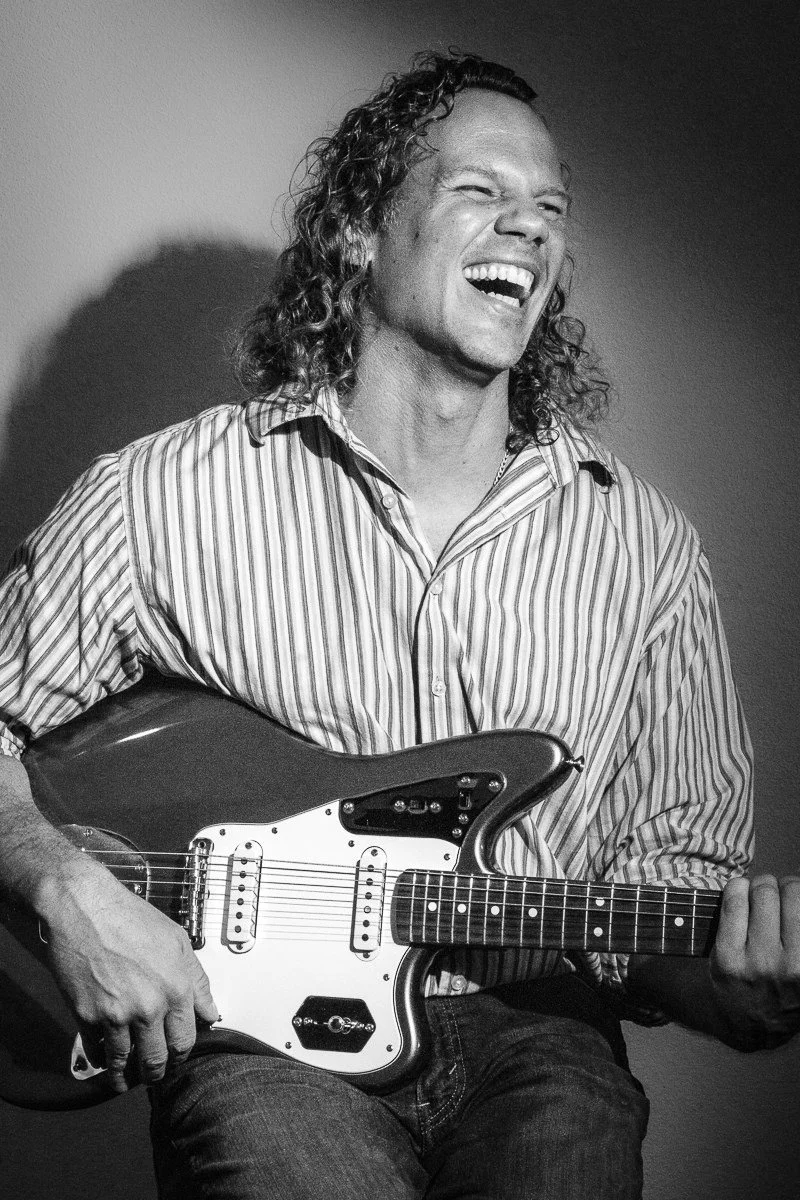
Brendan Praniewicz comes from a lineage of people who served. His father served 21 years in the army. He earned his MFA in creative writing from San Diego State and teaches creative writing at San Diego colleges.
He has 90 publications. He received second place in a first-chapters competition in the Seven Hills Review Chapter Competition in 2019 and won first place in the Rilla Askew Short Fiction Contest in 2020.