
Basic Life Training
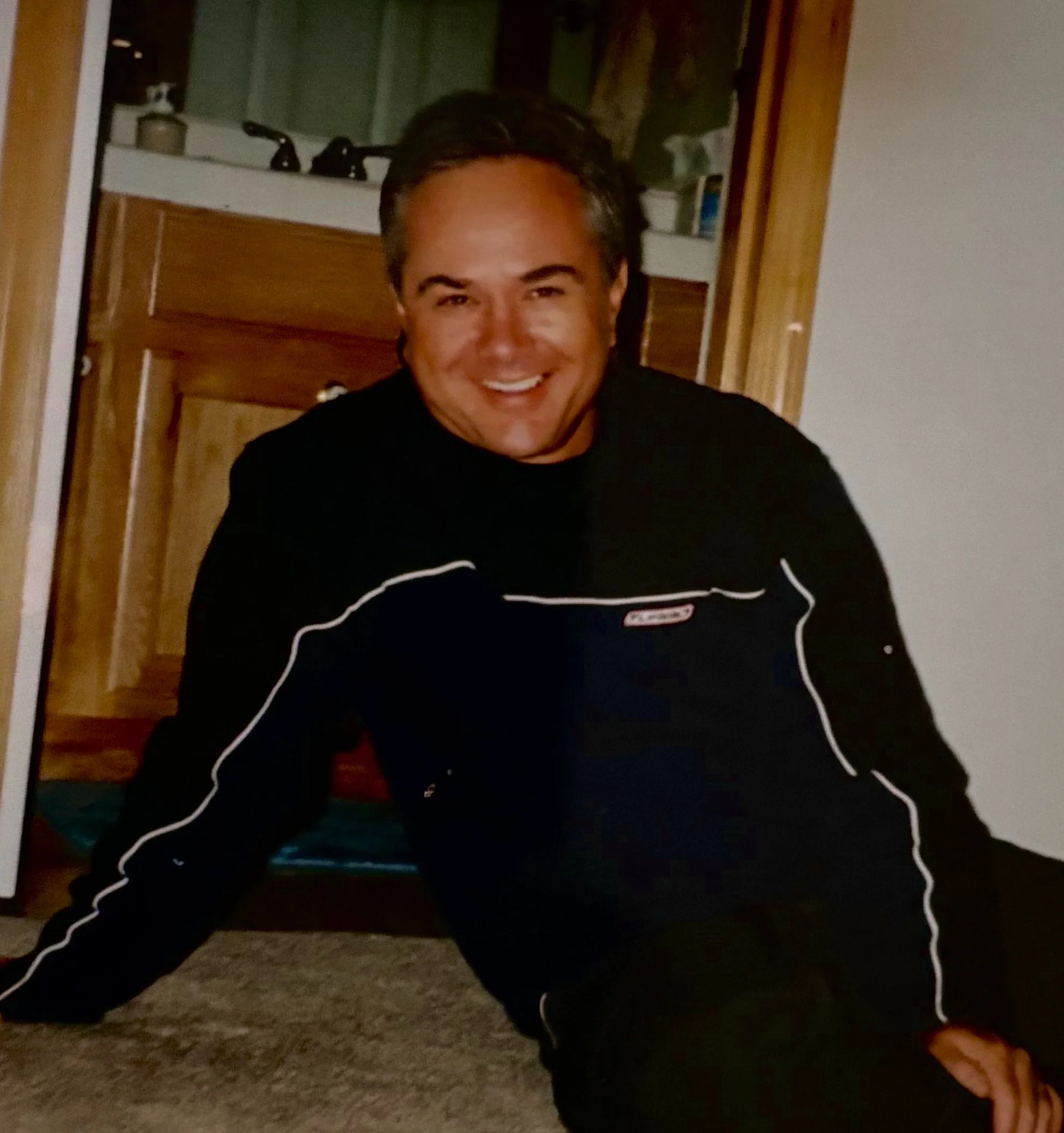
By Keven Backman
The following is a true story, limited only by anonymity.
It was hard for Schuyler to say why he enlisted in the Army. He had protested the draft and supported those who did. He briefly considered fleeing to Canada in 1971. He was horrified by the thought of having to sacrifice himself on the altar of defending America against communism when he had no idea what either meant. He was young but not stupid. He realized that the leaders of America were sending anyone to die half a world away but the sons of American leadership. His protest slogan was You Go First. But a day came when his country, right or wrong, delivered a message he could not refute: Schuyler had not educated himself enough to remain a member of The Great Society.
By 1979 Schuyler was living with a roommate in a crumby house and struggled to make rent by driving a school bus part-time. Another recession was imminent. With his limited prospects, he realized that he still had time to enlist in the armed forces. Three hots-and-a-cot, free clothes, and a salary were being advertised every day. Schuyler decided he had nothing else to sell but himself. And so it was that, since he was broke, single, and only partially employed in the winter of his 26th year, he began to toy with the idea of enlisting in the U.S. Army. The whole Army recruiting process unfolded for him in a way that surprised even himself.
Because he would be enlisting voluntarily Schuyler realized he had some options. His first option was discovering an occupation he might qualify for as a soldier. According to a recruitment flyer he once read at a laundromat, he might be able to choose work other than as an infantry rifleman, which was probably the role to which he would have been assigned as a draftee. So, Schuyler went to a recruitment center in Portland to explore his options.
Schuyler grew up near an airport and saw that the Army flew helicopters. He also knew it would have taken a college degree to fly in the Army, so he asked a recruiter if he could be trained as a helicopter mechanic, thinking that job could be less as affected by economic upheavals than his previous jobs. His recruiter, Corporal Clay, insisted that Schuyler pass certain aptitude tests, designed to predict the success a recruit would have in a wide range of Army occupational specialties, and Schuyler agreed. The tests were rigorous and lengthy, requiring almost a full day of impromptu essay, multiple choice, and mathematical responses. In the end, Corporal Clay was elated, “How would you like to be a spy?” He had decided that Schuyler had done very well in the testing, which made Schuyler grin. He had rarely been successful in school, so this was hopeful.
Corporal Clay introduced Schuyler to the U.S. Army’s Military Intelligence component and told Schuyler his test scores showed he was qualified to become a linguist; he could work as a translator and interpreter. The recruiter had said the Army allowed recruits to choose a language, unlike the Air Force or the Navy, and that some languages had bounties on them up to $2,500 upon successful completion of training. Since the bounty was close to the price of a new car, Schuyler was very interested.
While waiting in the testing office, Schuyler overheard a heated conversation in the next room between Corporal Clay and his supervisor, Sergeant First Class Mudd. Schuyler learned that not only was there a bounty paid to linguists, but there was also a bounty paid to the recruiters who found a linguist. He also learned conscripting a linguist involved risks for the government: what were the chances a recruit could finish language school, could pass an extensive background investigation, and could the recruit finish advanced specialized training? Test scores and the recruiting supervisor’s approval were mandatory. And to cover its wagers, the Army insisted that if a recruit flunked out of any part of their training, it could unilaterally appoint the recruit to any assignment that best meets the needs of the Army for the whole four-year enlistment period. Sitting in the training office, Schuyler secretly thanked goodness the Viet Nam War had ended in 1975.
Schuyler heard the discussion between the recruiters revolved around Schuyler’s score. Corporal Clay argued that Schuyler was qualified to enlist as a linguist, and Sergeant Mudd objected to that. The two recruiters both entered the testing office together frowning. Sergeant Mudd began at once trying to discourage Schuyler from becoming a linguist. This was shocking. It didn’t sound fair. When Sergeant Mudd finished speaking, Schuyler demanded, “With respect sir, did I not in fact pass the aptitude test to become a linguist?”
The supervisor and the recruiter looked at each other. Sergeant Mudd turned to Schuyler and said, “Yes son, you passed the test. My comments to Corporal Clay were that your score is a little low. You scored a 96. The minimum score required is 95. I do not feel confident you would be able to complete the language study.” Schuyler at first felt a little unnerved but then became convinced he was being cheated out of a bonus.
So, Schuyler asked him, “If I qualified with a 96, then am I entitled to begin training?” It was as near to calling out Sergeant Mudd as Schuyler could come.
Sergeant Mudd looked Schuyler dead in the eye while Corporal Clay stated, “Take a look at his other scores, sarge, and his GT score.”
Not breaking his gaze, Sergeant Mudd asked, “What’s his GT score?”
The corporal showed Sergeant Mudd the entire results of the testing performed by Schuyler that day, apparently for the first time, and among those scores was a General Technical score of 147, something apparently beyond either of their experience. All Schuyler’s scores were elevated, but none like the GT. About two years after this conversation, Schuyler learned that 147 was at the top of the range for a GT score and while he eventually met one other soldier who had an equivalent score, Schuyler would never meet anyone who scored higher.
To Sergeant Mudd’s credit, he thought for literally a minute in silence and then decided he could validate Schuyler’s enlistment. “I’ll be damned,” was all he said as he handed the folders back to Corporal Clay. “Carry on,” he ordered and he left the room to write an approval for Schuyler’s conscription. Schuyler felt lucky but did not fully understand what his GT score meant. Apparently, that score was treated if it were a measure of a soldier’s IQ, but Schuyler thought he had just gotten lucky on the tests. But Corporal Clay was back in positive mode now, and he cheerfully asked Schuyler which language he would like to choose.
The languages on the bounty list were all the most difficult languages to attempt, except for Russian, which was a near second in difficulty. Schuyler chose Russian. Corporal Clay immediately submitted a request via the office’s giant, chugging teletype machine. Within minutes a teletype response brought the machine back to life again. “Request denied. No slots available,” it read.
Schuyler reasoned, “Yeah, why sign up for a most difficult, language when the same bounty could be had for an easier one like Russian? Of course it was sold out.” So, for the unemployed Schuyler, Russian was moot. The second language on the chalkboard was Korean, a very difficult course of study, as it turned out. But Schuyler chose it and another request was sent; the response of which was congratulatory: the Army offered him a slot in the Basic Korean Course the following June. Schuyler could not fully explain why he wanted to become a linguist since high school English was almost unintelligible to him. Thankfully Sergeant Mudd had not asked about Schuyler’s high school GPA (1.65). He then decided at that moment to enlist but delayed his entry to wrap up his affairs. Corporal Clay slotted Schuyler to begin the 78-day-long Basic Training Course at Ft. Jackson, South Carolina, in early March, just in time to finish Basic Training and then start language school in California. Corporal Clay’s attitude was infectious and Schuyler was elated again, but the timing between Basic Training and language school would become crucial to Schuyler as the date of his language course drew near.
In January, a few weeks after that congratulatory teletype, and several weeks before Basic Training was to begin, Schuyler had been planning to work as much as he could until he had to fly to South Carolina. He also began selling some of the meager possessions he had and wouldn’t need in the Army as his enlistment date neared. He promised himself he would play and party as much as possible. But his plans were interrupted by an unfortunate event.
Schuyler was involved in a traffic accident in Portland one snowy night, just barely eight weeks before he had to report for active duty. His roommate, a petty miscreant named Driscol, had driven them in his station wagon to a tavern for a beer. When they arrived, Schuyler felt like he had a touch of the flu, so he went back to nap in Driscol’s car so as not to interrupt his evening. Even though it was very cold outside, Schuyler quickly fell asleep in the passenger seat. Later that night while Schuyler slept Driscol decided to drive them home and along the way somehow skidded into the back of a parked Pacific Gas & Electric boom-and-bucket truck, the crew of which was removing accumulated ice from power lines along the street. Just prior to impact the crew had taken a coffee break, so those men were uninjured. They had returned to the truck just in time to witness the results of the crash and telephone city police and emergency medical services. Driscol had too much to drink and emerged with only a black eye from the steering wheel. Schuyler was bleeding and injured because he hadn’t buckled up his seat belt to take a nap. Police in later reports had estimated Driscol and Schuyler had been travelling between 50 - 60 m.p.h. at impact.
Schuyler’s injuries were in fact horrific. Because the impact occurred on the nose of the wagon primarily on the passenger side, where Schuyler was seated, the car hood spun through the lower windshield into the cabin and struck Schuyler in the mouth. Insurance photos later showed the fender on that side was less than a foot long after the crash. The sheet metal removed Schyler’s front teeth, then exited his mouth through his right cheek. After that, inertia carried Schyler’s head into the now-shattered upper windshield, and that glass rearranged the right side of Schyler’s face. The incident was a dictionary example for why the curbside seat is often referred to as “the death seat.”
When everything came to a stop, Schuyler was not awakened. He did not hear the truck crew call for help, he did not recall refusing treatment by emergency personnel, and he did not remember either his trip to the hospital or admitting himself at the hospital emergency room. Emergency techs had barely managed to convince Schuyler to accompany them, which Schuyler had finally agreed to only if he could ride in the ambulance up front with the driver. Schuyler could not ever explain why he had been uncooperative.
What Schuyler did remember was waking up during surgery in the emergency room surgical theater. The lead physician had said something to his team like, “Oh he’s awake.”
Thinking he was spoken to, Schuyler said, “What’s going on in here?” and he tried to sit up. Eventually they got their patient back down, and with more anesthesia he again cooperated and remembered nothing of the operation after that.
At his next waking moment, Schuyler found himself lying on his back in a hospital bed looking at an utterly beautiful nurse standing there. He clearly remembered coming awake during surgery, but for some reason had imagined that when the surgery was finished, he had been discharged and sent home. When he realized he was back in the hospital, the first thing he asked the nurse was, “Why did I come back?”
The nurse cheerfully responded, “Well, we don’t know why, but we’re just glad you did. You’ve been in a coma for two days. I will go get the doctor.” After she departed, Schuyler noted his head was wrapped in large white bandages. The dressings were heavy, stuck out several inches, and his right eye was completely masked. Suddenly, a doctor in a lab coat and with a stethoscope around his neck briskly walked into the room and stood there scanning some documents he carried.
The doctor said, “Hello, I’m Dr. Getzl and I’m your plastic surgeon. You were in surgery for two and a half hours last night,” he seemed to read. “We took more than two hundred x-rays of your head, and everything checks out. A note here states that you awoke during surgery, but all in all that was a very successful operation, and you will make a good recovery. However, your right eyebrow won’t grow back.”
Schuyler thought about his comments and said, “Fine. Get out.”
“Excuse me?” the doctor asked.
“I said, ‘Get out,’” replied Schuyler.
Dr. Getzl considered this blankly for a moment then remarked, “I can see you’re not feeling well. I’ll be back a little later to talk about after care,” and he left.
Schuyler’s subsequent lawsuit against Driscol’s insurance carrier required frequent appointments between him and his surgeon with many examinations, photographs, and discussions of Schuyler’s progress. He and Dr. Getzl ultimately became friendly and even played golf together in the years to come. At one point the good doctor revealed he had never had a patient order him out of a hospital room before. “Well, you pissed me off,” Schuyler said. “I wasn’t even ready to learn my eyebrow wouldn’t grow back. And plus, you were wrong.” His eyebrow had managed somehow to regrow.
“I’ll get you back though,” Dr. Getzl replied pointing to Schuyler’s brow, “That one will turn gray before the other.”
Schuyler’s career in the Army began almost eight short weeks later in March when he reported to Ft. Jackson to begin Basic Training. He was still battered and bruised but not openly bleeding. Still, he carried an awful lot of angry red scarring that still needed knitting, had a few stitches remaining, and he was missing some front teeth. The mandatory buzz haircut worn by every military recruit made his appearance more severe, but at the time his appearance was the very least of his concerns. He was far more alarmed about the look of the men in his platoon: it appeared that every one of them was certainly from a place where murder was a misdemeanor.
Now Army Basic Training in those days consisted of an intense 11 weeks of daily classes, drills, and physical endurance training, executed in the company of dozens of other men for 18 hours a day. After their very taxing days the recruits slept for a few hours beside each other on narrow, uncomfortable, canvass Army cots arranged in rows in open bays with no place to hide and no privacy. Sleep was a priceless commodity. Schuyler learned to sleep at a moment’s notice, he found he could sleep standing up, he discovered he could sleep while marching. The Army provided security for the sleeping men every night in the form of a Fire Watch that consisted of roaming guards on rotating shifts keeping an eye out for fires, thievery, fights, etc.
Schuyler’s injuries immediately began to affect his military career. He thought that one of the injuries which medical personnel had not sufficiently warned him about was the aftereffects of his glass injuries. Rather than shattering into small blades and knives, automobile safety glass was designed to shatter into a rounded rubble that is less damaging, but it can still deeply embed in tissue. Amazingly, the body begins to expel any glass it finds. Schuyler’s medical team had diligently tried to remove all the glass they could find, but unfortunately glass is translucent to x-rays. Schuyler’s body would have to expel the rest, and it chose to do so in earnest at Ft. Jackson.
So, late on one of the first nights in the barracks, a very weary Schuyler was violently awakened by loud shouting and someone pulling and pushing him on his bunk. Thoroughly alarmed, he fought back and was tackled by guards. It turns out that while asleep, Schuyler had drawn his arm across a piece of broken glass embedded in his face, which had then carved a bloody gash on his forearm plainly visible to the guards. Afterwards, unfortunately, this scenario was repeated the following night and again on several other nights. Each incident resulting in the same chaos. To say his fellow barracks mates had become more than a little annoyed with him would be a stupefying understatement. Schuyler quickly found himself persona non grata in the platoon while the number of incidents climbed. He became convinced all the other recruits secretly sought his demise.
Over time, the cuts he administered to himself resulted in quieter interventions by guards, but by then he had become increasingly worried if this continued, he might be medically “recycled” into another unit to start Basic all over again. Schuyler had seen other troops get recycled and getting recycled was the ultimate nightmare. Historically, trainees would literally do anything to avoid it due to the severe physical and mental rigor that Basic Training required, but in Schuyler’s case, starting over would also risk him missing the start of his language course, which could threaten his bonus.
About four weeks through basic training, just after a successful rifle and hand grenade qualification at the firing range, where he managed an “expert” rating, Schuyler noticed a large piece of glass was making its way up and out through the exact center of his re-growing eyebrow. This was the last straw and Schuyler had had enough. He imagined maybe his range qualification results might allow him latitude to speak with the sergeant in charge about Schuyler’s medical dilemma. During a general break in shooting activities, Schuyler approached that sergeant, one Master Sergeant Block, and Schuyler asked him if he knew any first aid. “Yeah, private, I know some First Aid,” Sergeant Block said sneering. First Aid training was de rigueur for all non-commissioned officers, and as a veteran of the conflict in Viet Nam, Sergeant Block was eminently qualified. Talking fast, Schuyler briefly explained his medical condition and asked if the sergeant would be willing to remove a piece of glass from Schuyler’s face and save him from being murdered in the barracks. “Go to sick call,” the Range Master stated flatly.
Schuyler begged him to reconsider this order, because the risk of being recycled was probably high. He told the sergeant it would be worth the risk of imminent death in the barracks to not get recycled. About this, Block seemed unmoved, but to his credit, he thought for a second or two. Then with a complicated flick of his wrist, he brandished an evil-looking banana knife at Schuyler, the sight of which no doubt was meant as a deterrent to his choice of an ad hoc medical procedure. But Schuyler said nothing. He remained impassive. By then, a couple of passing soldiers noticed this conversation with the knife and casually stopped nearby to listen. Facing the worried-looking private in front of him, Sergeant Block flipped his blade from hand to hand and ordered, “Show me your forehead, private.” Schuyler removed his helmet and pointed to the offending spike working its way out. The sergeant casually tapped on the clearly visible green chunk of glass several times with his knife tip making a distinctive plainly heard clicking sound. This action stopped additional passersby, perhaps hoping that Sergeant Block was about to end Schuyler’s military career. But when the sergeant began to dig around in Schuyler’s forehead with the blade, everyone froze. Finally, the sergeant quietly asked Schuyler, “You ready, private?”
“Go on ahead on ‘er, sarge,” Schuyler said, hoping for the best, and the watchers held their collective breath. The sergeant assumed a bladed stance and with furrowed brow, he buried the knife point deeper into Schuyler’s forehead. The crowd gasped, but Schuyler did not flinch. Sergeant Block began to maneuver the knife carefully up and down to loosen the offending shard, his knife making uncomfortable scraping sounds as he did so. Still Schuyler did not wince. The knife began to create new sounds, sort of like the chatter from a saw blade on bone, but still Schuyler neither made a sound nor did he move. After several moments of this, Block quietly told Schuyler, “Hold your helmet under your chin, private,” Sergeant Block then succeeded with one last motion to gouge out a glass prism the size of a pencil eraser, and it arced downward with a gout of blood clinking and rattling in the bottom of Schuyler’s helmet.
The crowd moaned and weaved away in a single motion, “Oh no!” “Did you see that?” “What is this kid made of?” they gabbled. Schuyler remained stoic and stared at the splinter that had been in his head since January. The sergeant offered the patient a clean white handkerchief as if such a bandage were handed out at every such range exercise.
What Schuyler had not mentioned to Sergeant Block, or anyone else, was that his crash and surgery had caused moderate-level nerve damage to Schuyler’s face. He had almost normal facial movements and expressions, but his face was numb. So, the sergeant’s knife work was completely painless, and what looked like personal toughness was in fact anything but. Oddly enough, Schuyler’s calm demeanor seemed to strike a chord with recruits who had personally watched the medical intervention, a chord which was amplified in the stories they shared with recruits who had not been there, because almost immediately afterwards, a number of men Schuyler did not know came to him to congratulate him on the amazing “range surgery” and even asking if they could see the extracted fragment for themselves. Suddenly these scary men became instantly human and suddenly were his fellow men.
The best thing was that Schuyler’s self-inflicted wounds at night had stopped. As calmer nights in the barracks began to pass, an unlooked-for comradeship almost approaching fame sprang up and was showered on Schuyler until one day he finally learned what no one would tell him before now: it was the consensus from the beginning of Basic that he was the scariest-looking man in the platoon, and that he was the private voted most likely to end up on death row. But now, by displaying fortitude while literally under the knife, he seemed to have convinced an awful lot of people, including even some of the drill sergeants, that he had earned a different level of approach from his fellow recruits. The upshot was that Schuyler successfully graduated from Basic Training and became much more confident in his new-found brotherhood.
Right on schedule after Basic, he started his language course, passed it, and got his language bounty. Schuyler worked as a linguist for 13 years in the Military Occupational Specialty of 98G3LKP, Electronic Warfare/Signals Intelligence Voice Intercept Operator. Some of the friendships he developed in Basic Training would continue during his Army career and some lasted a lifetime. With his background investigation successfully completed, Schuyler then graduated from A.I.T. as Honor Graduate, finishing first in a class of 35 men. Because of that he was sent to further schooling at several posts on the east coast prior to being deployed to Korea at Christmastime, almost exactly two years after enlisting. He certainly still faced challenges.
These lessons in life began to be synthesized in Schuyler’s approach to people in general. Not every lesson was harsh, not every lesson pleasant. But they continued to help him make choices that avoided future difficulties. He began to systemize his decisions and actions that furthered his goals. He began to grow up. He could stand up for himself without battering the sensibilities of others. The real Basic Training lesson for Schuyler? He was no longer fooled by how people look and always became skilled in estimating the impact of others by watching how they act. And he trusted his own perceptions when he found the views of others were questionable.
After graduating from the Basic Korean Course at D.L.I. the first time, an experience he considered his first real success in the classroom, Schuyler eventually re-enlisted for the Intermediate Korean Course for a bonus and an additional four-year hitch. This meant he didn’t have to travel to Korea every other year for a while. With a new wife and family in tow, and at nearly 37 years of age, Schuyler began to think about finishing a college degree and resigning from the Army due to several service-connected injuries. But his military experience had instilled in him a better understanding of the motives and desires of his teammates and how he could better serve them, and that helped his military career. Still, he was ambivalent about returning to college out of fears based on his experiences in civilian schools.
So, Schuyler was surprised one morning while reading Dear Abby with his coffee. Schuyler read a letter that stated, “Dear Abby, I am a 50-year-old single mother of two who wants to become a nurse. But the college courses required would take four years to complete. Should I do it? Signed, Desperate in Des Moines.”
Miss Abigail Van Buren wrote back, “Dear Desperate, how old will you be in four years if you don’t go to nursing school? Signed, Dear Abby.”
Schuyler ’s reaction was one of deep shock. It was as if Dear Abby reached up out of the newspaper and slapped him in the face. His new bride had broached the subject more than once of Schuyler attending college because she was convinced that he could be successful. But Schuyler had only brought up the old excuses that it would be too difficult and too expensive. Dear Abby had made some things plain. He would be older even if he didn’t do it, he deduced his education would never be cheaper than it was this very day, and his wife was convinced Schuyler could successfully earn a college degree. That settled it. With the help of his wife, he began a course of study at the community college located near D.L.I.
After three years at the community college, Schuyler completed an associate’s degree. After that he enrolled at another college to complete a bachelor’s degree. At the age of 40, this was up to then, the single most impactful academic achievement he ever attempted. The impact on him personally was profound. His internal world dramatically expanded. People would ask for his advice. Employers would invite him to interview for jobs. With those kinds of opportunities available, Schuyler had applied to medically separate from the Army and he became a civilian again. His realized income almost doubled from that which he had earned as a Staff Sergeant to that he earned as a civilian HR Assistant.
Schuyler owed a debt to almost everyone he worked with while in the Army. He owed thanks and gratitude to Sergeant Block for taking on his, albeit minor, medical conundrum and solving it in a way that enhanced not only his medical rehabilitation, but also showed Schuyler that people were not always what they seem. Their mistaken assumptions about Schuyler were hardly different from his about them. Schuyler brought this lesson to work nearly every day as a civilian. And his mistaken assumptions about a future in Canada were also laid to rest. Schuyler had the occasion to counsel others to avoid the mistake of taking monumental actions on rashly held beliefs or ideas that can be addressed with more modest, smaller-scale remedies tried first.
Ten years after that, with his wife’s support and assistance, Schuyler finished a master’s degree in business. With this degree he was able to attend post-graduate education in specialty areas like Total Quality Management, Human Resources Development, Database Administration, and other subjects that employers were willing to finance and send him to so he could bring advanced knowledge back to the workplace. Schuyler eventually became a director of human resources in the California community college system. As such, he was able to counsel employees (many of whom were former soldiers) that it is not as important to consider what others think of you but is far more important to consider what exactly you think of yourself, and to think for yourself; others cannot possibly know all the ends that you might achieve, and sometimes not even you can. After finishing his master’s degree, Schuyler’s life was dramatically changed not only in enhanced (though not perfect) skills in dealing with people, but also in his income, which expanded the opportunities available to his family. He never got rich. But he was able to save for retirement, and he became a much more competent, confident employee, teammate, and advisor.
Schuyler felt the trick is to just get started and then never give up. What college teaches you is to go around, over, and through every obstacle until you reach your goal, all the while believing in yourself, and developing one’s faith in others. When you have that, it is surprising how much trust you can then have in your fellow men and women. If you are fair and honest and if you can help others, you can be successful. But first you must believe in yourself!
****
Keven Backman is a former Electronic Warfare/Signals Intelligence Voice Intercept Operator, 98G3lKP, who served from March 1980 to January 1993. Three Overseas tours totaling 54 months in the Republic of Korea. He was medically discharged due to service-connected injuries. Keven studied at the Defense Language Institute twice, for Basic and Intermediate Korean Courses. Mr. Backman was selected to attend a semester at Brigham Young University and the Monterey Institute of International Studies for Advanced Korean courses.